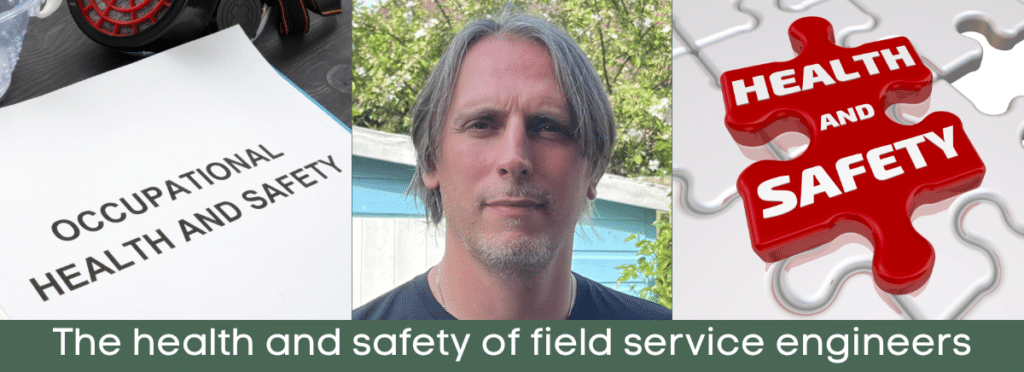
The health and safety of field service engineers

Last Updated on 21 July 2026 by Tim Robertson
What is it like to have a career in health and safety? In 2024, Richard Meredith answered that question by sharing his story and experience.
Update in 2026
New Venture in Health and Safety
After nearly 16 years with Edwards, you set up your own company to advise organisations on health & safety, prioritising the mental health and wellbeing of their employees and management system implementation. With hindsight how difficult was the transition from large organisation to start up?
I started my professional career in Quality Management in the semiconductor industry which has always been subject to market peaks and troughs. This unfortunately meant a lack of job security, even if you were a regular full-time employee. As such, I have never had a perception of job security being tied to regular full-time employment, meaning I have not had any issues switching between RFT and contractor work.
So, this is the second time I have set up my own company. The big difference this time is that, when I made the jump this time, I had no clients lined up. A little scary but the time was right for me to do my own thing.
The difficulty has been being seen in very competitive market. It took a while to work out but I realised that using word of mouth from people who had worked with me previously, works so much better than hitting potential clients cold. With hindsight it seems blindingly obvious, but I had to run down a few dead ends before remembering the power of recommendation.
Also, Edwards had a very close community of SHE professionals who were always willing to share advice if you were presented with a problem you’d never encountered before. Obviously, you don’t have access to that network once you are on your own.
Establishing a company
What advice would you give to someone else considering doing or about to do this?
It’s not for everyone. You need to be honest with yourself and determine if you are happy to hold your nerve between contracts or if you need the security of regular full-time employment.
There’s no right or wrong answer, just what is right for you.
Rich Meredith Health & Safety Limited
Can you outline your process for helping an organisation to adapt? How quickly can an organisation see change?
Not every client is giving me the mandate to transform their business and achieve world class levels of health and safety performance.
My contracts vary as to what I need to deliver including compliance, mental health at work & wellbeing consultancy/training and management system implementation (e.g. ISO 9001). But I will always provide more than what the contract defines, for example focussing on building relationships with individuals to improve organisational cultures.
Having said that, I do have a recipe for success that’s worked before.
1. Start at the top
You can’t instigate cultural change unless senior management are on board. You will end up with priority conflicts, and any positive changes will ultimately fail. This is why with any roll out of i-act Positive Mental Health & Wellbeing training; I would start with an initial training session of the senior management team.
2. Focus on behaviours
9 out of 10 workplace accidents will include unsafe behaviour as a cause. This becomes even more acute in Field Service Operations where you have little control of the work environment, as it is controlled by the customer. So, the second ingredient would be a behavioural safety programme.
3. Back up the talk
Behavioural safety programmes are great, but they can feel like they put all the emphasis on the individual, which can meet with an immovable force if the individual feels unsupported. Field Service Engineers by the nature of what they do are practically minded. So, if an FSE identifies an issue and raises it, then try to respond with a practical response where possible e.g. a simple tool to make hard to reach fixings easier to torque and prevent ergonomic strain or even simply comfortable PPE. An organisation cannot send a stronger message of ‘we care’, which will supercharge changes in safety culture.
As to how quickly an organisation can change, really that comes down to size. However, even in a large organisation, you would focus on change for individual teams as each one will have its own health & safety culture, largely determined by its leadership.
Work Life Balance
On a personal level, how has your work life balance changed?
I have been lucky that I have had global roles with travel that relied on a degree of work/life balance and incredible bosses who trusted me to deliver outcomes and not micromanage me or the process. Having said that, being my own boss I do like having full autonomy on how I spend my workdays. Which has given me the opportunity to finish my latest fiction book Valhalla, written under my pseudonym, Alan Meredith.
Senior Manager at Edwards Vacuum, Richard Meredith supports the health and safety of over 2500 service engineers
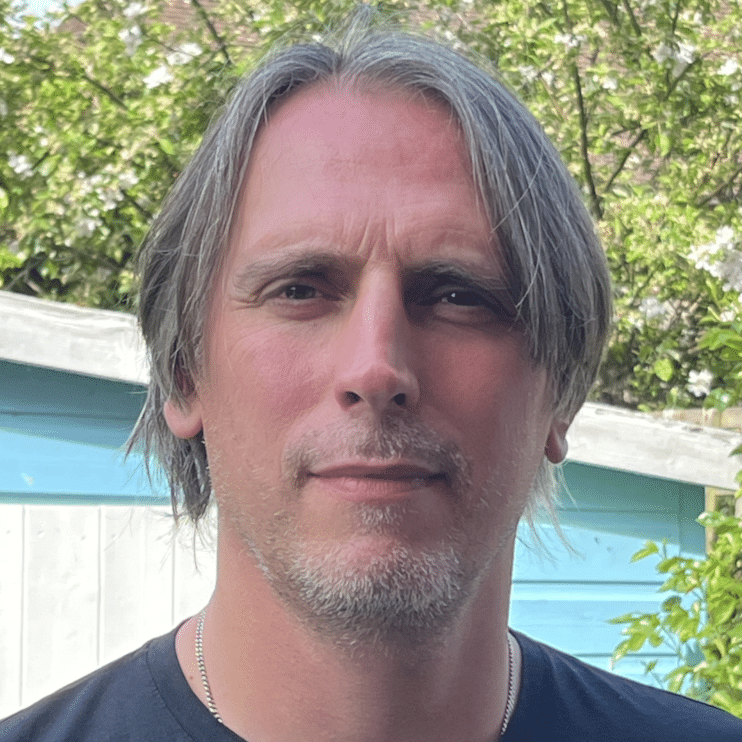
Richard Meredith works for Edwards Vacuum (a subsidiary of Atlas Copco) as a senior manager in Field Service SHE (safety, health and environment). Richard moved into this role from quality.
Background and path to field service management and health and safety
Could you give a brief description of your background and what led you to study Law and then move into Quality Engineering?
I was following an academic path for a career in law. Very soon into my undergraduate degree in law I realised how boring I found it (sorry to any legal professionals out there).
In retrospect I should have switched courses, but I understood the concepts well enough, and I knew I would leave university with a good degree. After university I kind of drifted just doing jobs to pay the bills, topping up money from playing semi pro rugby.
After breaking my arm playing rugby, I lost my sense of identity and my mental health suffered. I ended up relocating and by chance took an entry level job in Quality at Applied Materials. This is where I consider my real professional career started.
I should say that I’m not an engineer, but I have been in roles where this was the standard job role title.
My first quality role was to support the implementation of a quality management system which needed to comply with ISO 9001 and the corporate management system of the parent company. My law degree helped with this role as there were many parallels with the parent/child company management systems and the EU and UK legal systems.
Interests and Inspirations
Were there any childhood interests which were a factor?
Not really. My childhood interests were playing rugby and writing fiction.
I have retired from rugby now after injury. I have also self-published two fiction books, Shimmer and Midas, and just about to publish another. Writing for me is not just relaxation but also a form of therapy as I write about relationships.

Has there been a particular person who has inspired you?
I am someone who believes you learn something from every person you meet, even if it is how not to conduct yourself. I am inspired by anyone who does something better than me. That’s most people.
Typical Day managing Health and Safety
What exactly does your role include?
As per the job description, to support line management to ensure the health and safety of approximately 2500 field service engineers working at semiconductor manufacturers across the US, Europe, the Middle East and Asia. Other things have slipped into my role over time, but such is the nature of a role at a large corporate organisation.
What’s your typical day like?
A quick skim of electronic communications looking for any breaking issues or escalations.
If all good, then working on establishment of world class safety culture by supporting the regional health and safety teams.
The aim for my role is to be strategic but, based on need, my job can get very tactical.
Which other people/departments in the workplace give you support?
Customers, field service operations, engineering, senior management, internal network of SHE Managers, operational excellence specialists and digital teams.
Quality work as part of Health and Safety
In your opinion, what’s the link between SHE and Quality Engineering?
The key link / cross over is the management systems for both Environment (ISO 14001), Occupational Health & Safety (ISO 45001) and Quality (ISO 9001) which have many common requirements and transferable skills such as internal audit.
How do you use your experience as a Quality Engineer in your current role?
I had very strong experience in creating and implementing management systems and delivering objectives and projects successfully. The key difference I had coming into Health & Safety was that I was no longer the subject matter expert (SME) and I had to then rely on the regional teams being the SMEs.

Supporting health, safety and wellbeing
How much of your work is involved with realigning things after Covid?
We realised very quickly that we had to support employees during COVID, especially because of the impact of lockdowns.
We were one of the industries which was kept open. So, many of our employees were still coming in to work whilst the seriousness of Covid was still unknown. Whilst others were working from home and possibly facing:
Isolation if they lived alone
Working in noise and cramped conditions if they lived with family
Home educating whilst working if they had children
One key programme we have been pursuing has been i-act Managing and Promoting Positive Mental Health and Wellbeing. It was a programme we were implementing anyway off the back of the results of work-related stress surveys, but the timing of i-act has been fortuitous. We started in March 2020 (UK lockdown) and were able to continue as i-act had an online option. And we trained our China team in January 2022 just before the lockdowns there.
We have found i-act to be very helpful as it has a strong proactive element rather than just being reactive.
What are the key issues for employee health and wellbeing going forward?
Stress sandwiches.
Work related stress
e.g., excessive workload
and non-work-related stress
e.g., bereavement.
My experience and feedback from others are that these things tend to happen at the same time. One of the key issues for individuals is making time for themselves. High pressure jobs plus the number of things modern life throws at us (part of parenting today appears to be being your children’s PA) makes prioritising time for ourselves very difficult to achieve.

Key achievement
What is one of your key achievements?
I am most proud of the i-act implementation.
i-act is now mandatory training for all line managers at Edwards. i-act was a grass roots programme and in getting it established we had to convince key non-believers in the criticality of training line managers in promoting and supporting mental health. I was lucky that I was strongly supported by my line management on this.
If someone reading this wants to set up their own mental health programme within their company, what would you advise as the first steps?
Start at the top and get senior leadership on side first of all. Be prepared to have a few supporters, some detractors and a lot of people sitting on the fence to start with.
We started by using:
https://www.hse.gov.uk/stress/standards/step2/surveys.htm
Technology and health and safety
How do your engineers report back to you when they are on site?
Health and safety reporting was a problem as the database was hosted behind the company website’s firewall. So, if one of our engineers needed to report a health and safety issue, they had to:
Leave the workplace
Find somewhere with an internet connection
Log into VPN
Report the issue
This was not ideal, and engagement was low, so we developed a mobile app. That meant that our engineers could stay on site and report easily and quickly.
The intention was to improve reporting and create better visibility of health & safety issues such as hazards, first aids and near misses. This did happen but something else happened too. Safety culture improved immediately, and we think that the app was a trigger. Our engineers felt the message of:
‘We care about your health and safety’
So, they immediately took more care.

Team management and relationships
How do you build relationships across your team to help morale?
I have one to ones with all my team. When I do this, I put myself firmly in the role of the servant leader and make sure I am supporting my team to achieve their local goals. The agenda for these meeting is very fluid, and the focus is on what my team member needs. Sometimes that could just be a chat and listening to understand, rather than trying to find a solution to a problem.
How often do your field team meet each other in person?
Pre-COVID the aim was to meet everyone face to face at least once per year in their own countries plus get everyone together for a team meeting as well. I hope to get everyone back together for a team session in early 2023.
What are the key ways you are creating a network of supporting managers trained in positive health and wellbeing practices?
i-act. We have trained our own people to deliver i-act including one of our General Managers. Although still in implementation, we will have multiple trainers across all the countries that we operate in.
What should all field managers keep in mind with their teams?
That their team’s health (including support of mental health) and safety is their responsibility to ensure. Everyone should go home safe and well. Health and Safety’s role is to be a support to field managers to fulfil their responsibility to all members of the team.
How do you support someone in your team when things have gone wrong because of a mistake?
I try to focus on supporting the recovery from the mistake. People tend to be expert at beating themselves up for mistakes without me drawing further attention to it.
Most challenging part of the job
What do you find most challenging when you are working?
Escalations. They tend to be all consuming when they happen and distract me from the parts of the job I enjoy, which are strategic actions which will prevent surprises.
What has been your most challenging issue to date?
Establishing i-act has been one of the greatest challenges due to the stigma and preconceptions around mental health that existed in pockets. It was a circular problem as the training addresses these opinions head on, but you need those same managers to approve and attend the training on a subject they have stigmatised views on.
The future
Are your plans robust enough to cope with the next twelve + months and what is happening in world economies – for example, fuel costs?
Supporting mental health is still a work in progress and we are still training line managers, but we aim to support the well being of all our people. We do lots of things. For example, we have flexible working in place to help employees who have family issues.
We also still have the aftermath of Covid, and I don’t think we will really see the impact of that until a few years down the line.
How has your role changed you personally?
The E part of my SHE role is the smallest in some ways. One thing I have done is to stop using single use plastic. It has been a challenge but has changed the way my family and I eat. For example, I make my own bread now.
Further reading

Michael Riley discusses mental health in field engineering
Educate yourself about the science of vacuum


Responses