
Working in the Field as an Electrical and Automation Engineer

Last Updated on 16 September 2026 by Tim Robertson
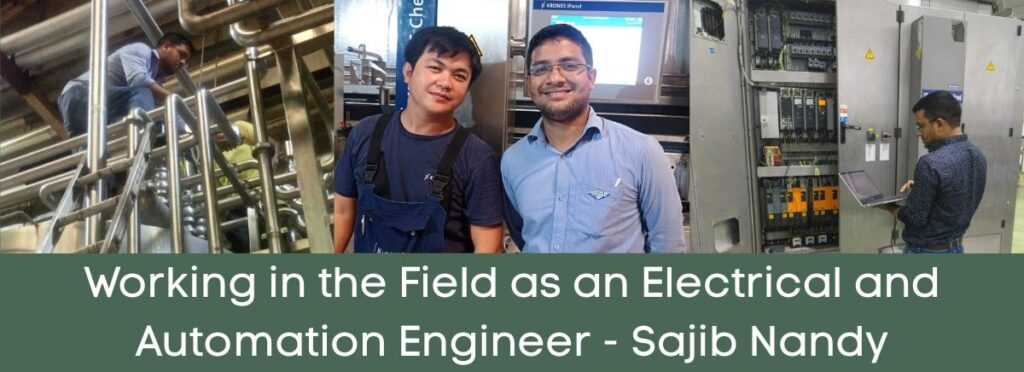
What is it like to work in the field as an Electrical and Automation Engineer. Sajib Nandy has extensive experience as an Electrical and Automation Engineer across the food and beverage industry
In this article he shares his experience and shows why a career as an Electrical and Automation Engineer gives variety and opportunities to work on different types of equipment and technologies.
Sajib works for Transcom Beverages Limited.
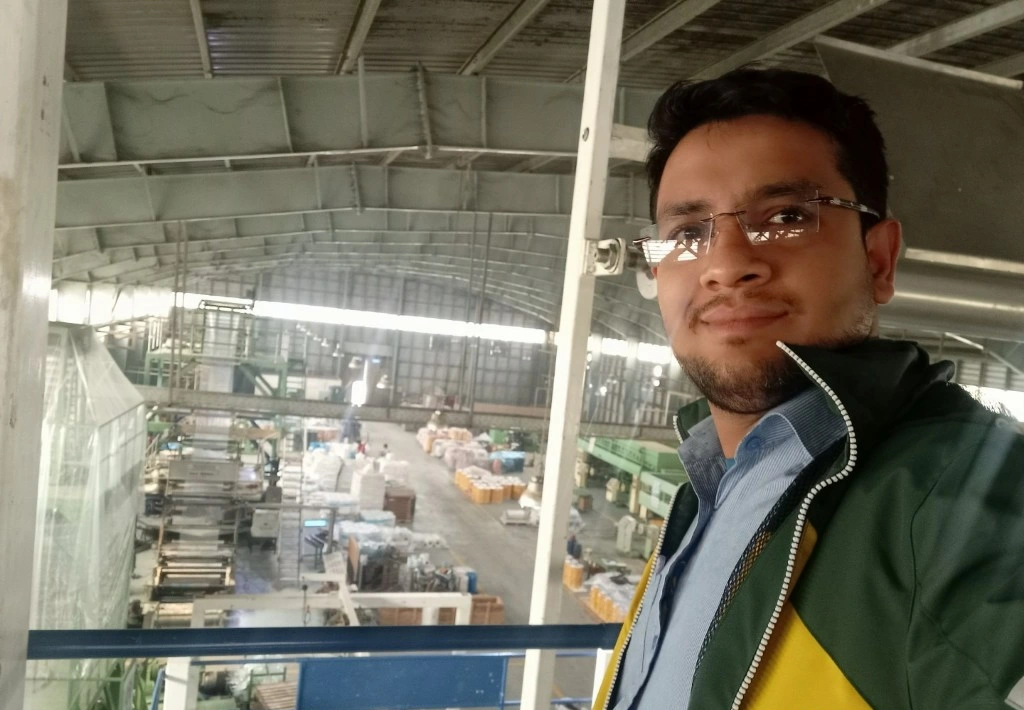
An Electrical and Automation Engineer in the Food and Beverage Industry
Background
Were you interested in how things worked when you were a child? Can you give examples?
How can a battery work was the first thing I was curious about. Another thing was the battery car. I was curious about the running time, the battery and the DC motor.
What is the earliest thing you can remember fixing or taking apart?
The earliest thing was taking apart a small battery-operated car. I opened it and saw that it worked with a small DC motor and I managed to fix that.
Can you remember the first time you used a computer or a phone? What did you do?
In 2001 I used the Grameenphone – antenna heavy button phone. That time it was GSM phone which has SMS service It was really exciting for me.
Has there been a particular person (or people) who has inspired you?
Pranay Krishna Sarker was my Maths teacher with a good personality and innovative thinking about mathematics which really inspired me.
Why did you decide to study electrical and electronics engineering rather than a different type of engineering?
I chose to study electrical and electronics engineering because of a childhood passion about electrical things as well as being good at maths and physics.
Working as an Electrical and Automation Engineer
Can you explain the work of an Electrical Engineer?
I am working as an Electrical Engineer at Transcom Beverages Ltd. My role is mainly to ensure the reliable, safe, and efficient operation of electrical, automation, instrumentation, and utility systems in the beverage manufacturing plant. Transcom Beverages Ltd operates modern manufacturing plants in Bangladesh for Pepsi, 7UP, Mirinda, Mountain Dew, Aquafina and other products.
My main responsibilities are as follows.
Electrical Maintenance as an Electrical and Automation Engineer
o Preventive and corrective maintenance of electrical equipment.
o Maintain LT/HT panels, MCC, PCC, VCB, transformers and distribution systems.
o Inspect cables, busbars, breakers, contactors, relays and electrical connections.
o Troubleshoot electrical faults and minimize production downtime.
o Monitor transformers, generators, capacitor banks and power distribution.
o Maintain power factor and monitor electrical energy consumption.
o Support utility equipment such as compressors, chillers, HVAC, pumps, RO/WTP and ETP.
o TBL maintenance documentation also covers HT/LT systems, transformers, generators, capacitor banks, compressors, HVAC and other utilities.
Production Line Maintenance as an Electrical and Automation Engineer
o Support electrical maintenance of CSD, PET bottle, filling, labelling, packing and conveyor lines.
o Maintain motors, VFDs, sensors, control panels and machine electrical systems.
o Troubleshoot PLC and automation-related electrical problems. A TBL electrical/automation role specifically includes maintenance of CSD, syrup/CIP, Aquafina, CO₂ and HVAC systems.
o Preventive Maintenance
o Prepare and execute daily, weekly, monthly and annual PM schedules.
o Perform inspection, testing, cleaning and tightening of electrical equipment.
o Maintain maintenance records, checklists and breakdown reports.
o Analyse repeated failures and implement corrective actions.
o Electrical Safety:
o Ensure proper earthing and electrical protection.
o Check protection devices, breakers and interlocks.
o Follow LOTO (Lockout/Tagout) and plant electrical safety procedures.
o Ensure electrical work complies with company and statutory safety requirements.
What does the work of an Automation Engineer include?
It includes automation and instrumentation, for example:
o Monitor PLC, HMI, VFD, sensors and control systems.
o Check process instruments and ensure proper measurement/control.
o Assist with calibration and troubleshooting of instruments.
o Maintain machine interlocks and safety systems.
o Any automation work can implementation
o Existing program on machine modification.
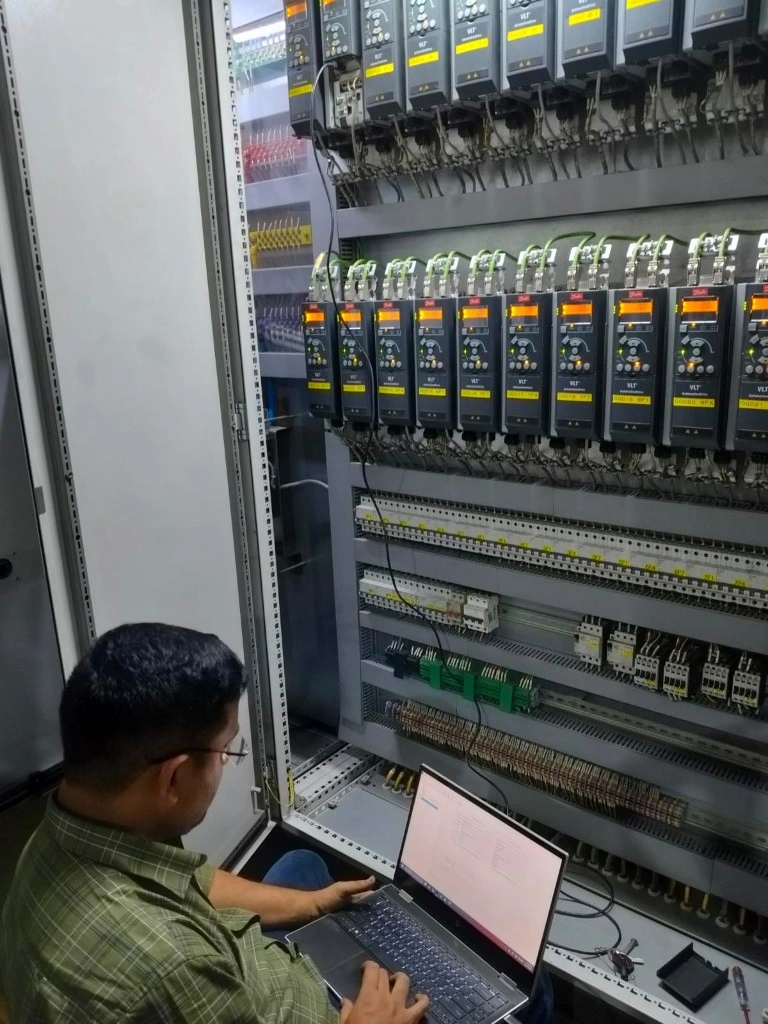
Working on Packaging and Bottling equipment as an Electrical and Automation Engineer
What are the different types of packaging equipment you have worked on as an Electrical and Automation Engineer? (serviced, maintained and installed)?
I have experienced working with different types of bottling and packaging equipment, including:
PET blow moulding machines,
bottle rinsing/filling/capping machines,
labelling machines,
conveyors,
shrink wrapping machines,
case packers,
palletizers
and bottle inspection systems.
My responsibilities include preventive and breakdown maintenance, electrical troubleshooting, installation and commissioning, PLC/HMI and VFD troubleshooting, sensor and motor-related maintenance, and ensuring the equipment operates safely and efficiently with minimum production downtime.
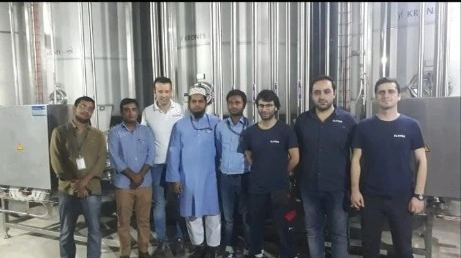
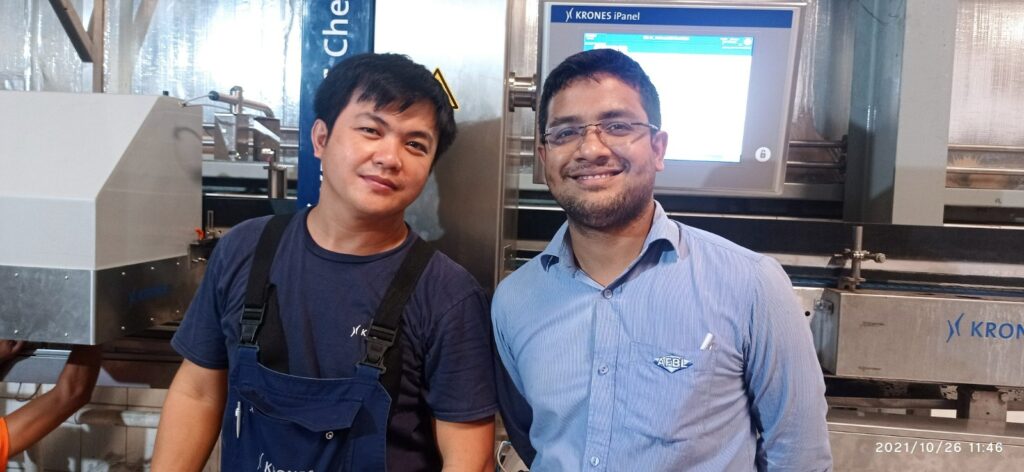
Commissions Engineer at Krones Checkmat
Working time with Commissions Engineer at Krones Checkmat, container inspection generally means checking bottles/containers for defects before they continue through the line.
Typical inspection points include:
- Container presence – detects missing or incorrectly positioned bottles.
- Fill level – checks whether the bottle is underfilled or overfilled.
- Cap/closure inspection – detects missing, tilted, damaged, or incorrectly positioned caps.
- Label inspection – checks label presence, position, and sometimes quality.
- Container damage – detects broken, cracked, deformed, or damaged containers, depending on the Checkmat configuration.
- Foreign material/appearance – camera-based systems can inspect certain visible contamination or defects.
- Neck/finish inspection – checks the bottle mouth/neck area for defects where the installed inspection system supports it.
- Reject system – defective containers are automatically rejected from the production line.
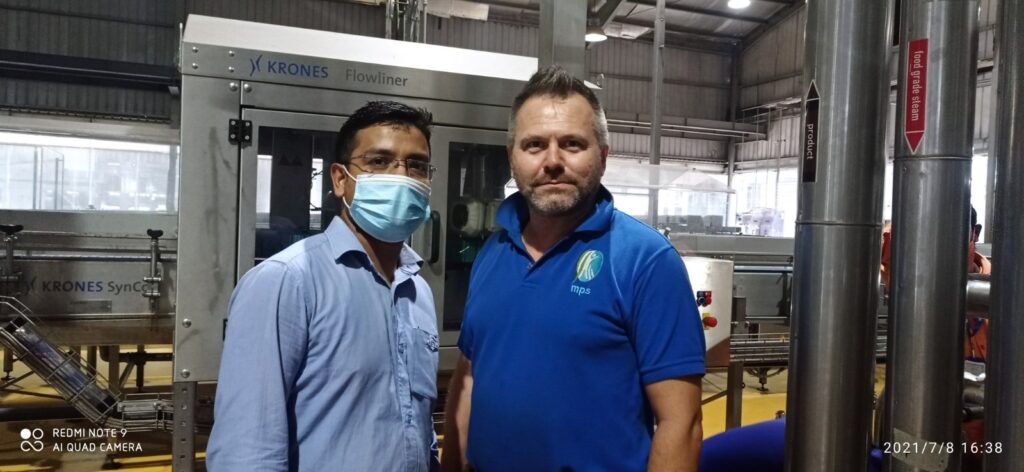
Krones Shrink Wrapper
Krones Shrink Wrapper is the packaging machine that groups bottles/containers and wraps them with shrink film, then uses heat to shrink the film around the pack.
If you are troubleshooting a Krones shrink-wrapper, I can help with:
• Bottle infeed and spacing
• Group formation / pack pattern
• Film feeding and film cutting
• Film wrapping
• Shrink tunnel temperature and conveyor speed
• Bottle falling or gaps at the infeed
• Pack size/position problems
• Reject system
• Sensors and photoelectric switches
• VFD/servo parameters
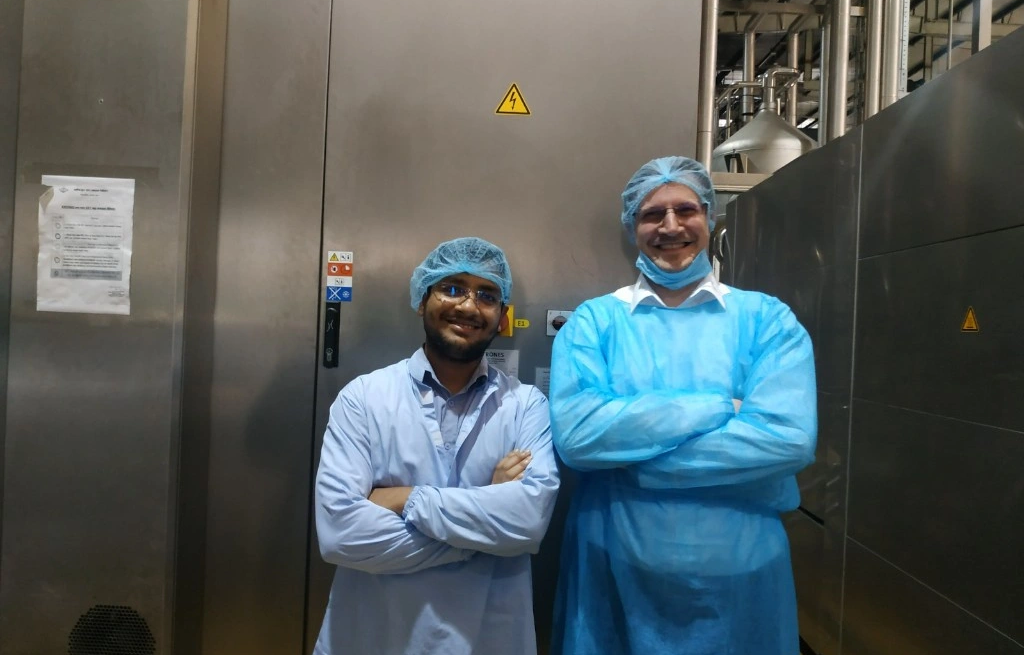
• PLC/HMI alarms …. Commissioning time with Krones Engineer
Transfer of skills as an Electrical and Automation Engineer
As an Electrical and Automation Engineer, how did your skills transfer from one type of equipment to another?
My electrical maintenance experience has transferred directly into PLC automation because I already had a strong understanding of motors, sensors, relays, contactors, VFDs, control circuits and electrical drawings. These are the main field components that interact with a PLC. By understanding how the inputs and outputs work, I was able to troubleshoot PLC-controlled equipment more effectively. I developed skills in PLC input/output checking, fault diagnosis, HMI monitoring, interlock and sequence troubleshooting, VFD communication, and identifying problems between field devices and the PLC.
When moving from one machine to another, I focus on understanding the control philosophy, PLC logic, I/O structure and machine sequence. This allows me to transfer my troubleshooting skills from bottling and packaging equipment to other automated systems.
My combination of electrical, instrumentation and PLC automation knowledge helps me diagnose faults from the field device level through to the PLC and HMI level, reducing downtime and improving equipment reliability.
Working as an Electrical and Automation Engineer at Transcom Beverages Limited, PepsiCo Franchisee
Can you describe a typical day as an Electrical and Automation Engineer at Transcom Beverages?
A typical day at Transcom Beverages starts with reviewing the production plan, previous shift reports, equipment condition and any outstanding breakdowns. I coordinate with the production and maintenance teams to identify critical equipment and prioritize preventive or corrective maintenance activities.
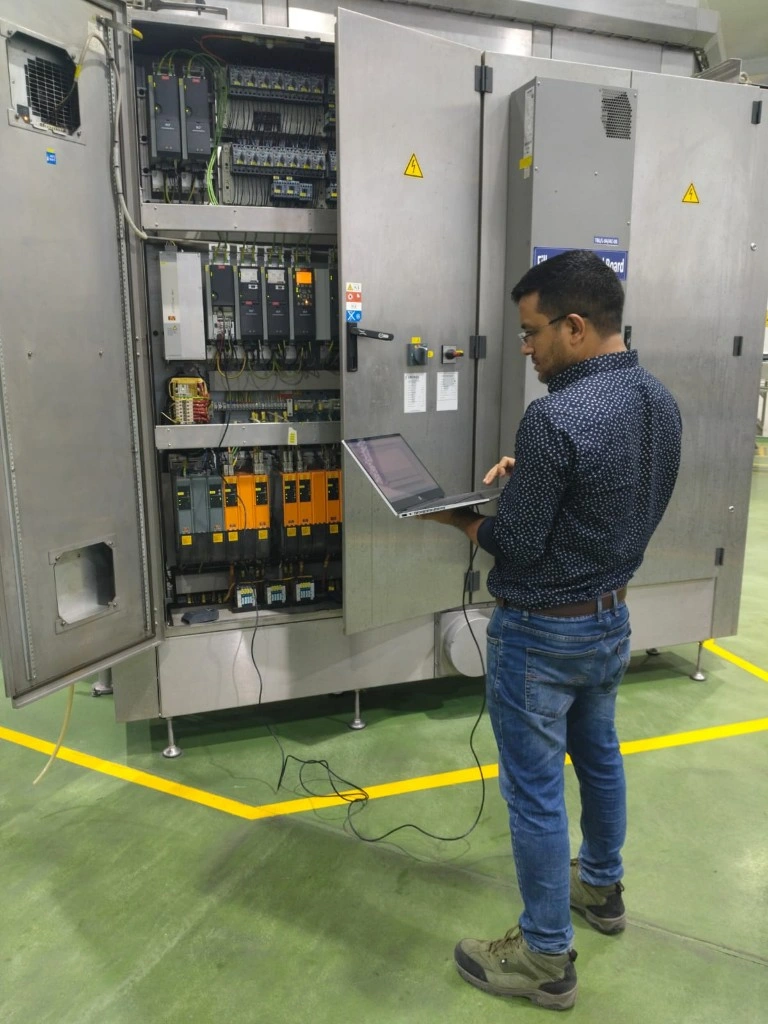
During production, I monitor the electrical and automation systems of bottling and packaging equipment, including filling and capping machines, conveyors, labelling and packing systems. I troubleshoot motors, VFDs, sensors, control panels, PLC inputs and outputs, HMI alarms, interlocks and other automation-related issues whenever required.
I also carry out preventive maintenance such as electrical inspections, checking control panels and connections, testing sensors and safety devices, and monitoring the condition of motors, drives and other electrical components.
If a breakdown occurs, I follow a systematic troubleshooting approach to identify the root cause and restore the machine as quickly and safely as possible.
As an Electrical and Automation Engineer, safety is an important part of my daily work, so I follow proper isolation and LOTO procedures before electrical maintenance. I also maintain maintenance records, report breakdowns and communicate equipment status with the production and engineering teams.
Overall, my main focus each day is to keep the bottling and packaging lines running safely and reliably, minimize downtime, support production targets and continuously improve equipment performance through electrical and PLC automation knowledge.”
How many different people do you work with during your working week? What type of roles are they doing?
I typically work with around 15–25 people during a week, including production operators and supervisors, electrical and mechanical technicians, automation and instrumentation engineers, utilities personnel, quality and food-safety staff, stores/spare-parts personnel, and maintenance managers.
Most of our work is coordinated around preventive maintenance, breakdown troubleshooting, PLC automation and keeping the production lines running safely with minimum downtime.
I also check spare-parts availability, identify required materials for preventive and breakdown maintenance, and communicate with the store team when parts need to be issued, replaced or replenished. This helps ensure that maintenance work can be completed quickly and reduces production downtime.
How many different sites do you work at?
I primarily work at one main Transcom Beverages production site, where as an Electrical and Automation Engineer I support the electrical, bottling, packaging and PLC automation systems.
However, when required, I may coordinate with engineering or maintenance teams at other company sites for technical support, knowledge sharing, equipment troubleshooting or improvement projects. I also work with the engineering store to maintain stock spare parts of electrical and electronic components.
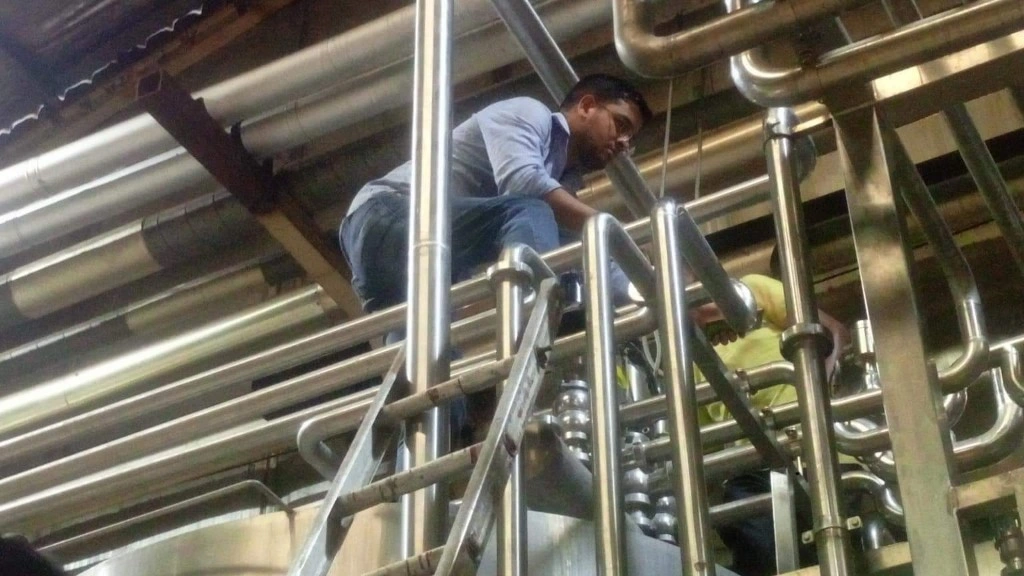
Most challenging part of the job as an Electrical and Automation Engineer
What has been your most challenging engineering job ever?
One of my most challenging engineering jobs as an Electrical and Automation Engineer was handling a critical breakdown of packaging or bottling equipment when the required spare part was not available in our Engineering Store. The production line was stopped, so the main challenge was to restore the equipment safely while minimizing downtime.
First, I diagnosed the problem systematically instead of immediately assuming that the failed component needed replacement. I checked the electrical drawings, PLC inputs and outputs, sensors, control wiring, VFDs, protection devices and related components to confirm the actual root cause.
After confirming the faulty component, I checked the Engineering Store for an equivalent or compatible spare. When the exact part was unavailable, I discussed the situation with the maintenance and engineering team and looked for a safe temporary solution or compatible component, without compromising equipment safety or reliability. If a replacement had to be sourced externally, I coordinated with the Engineering Store and relevant procurement team to arrange it as quickly as possible.
After the repair, I tested the equipment thoroughly, monitored the machine during production and confirmed that the fault had been resolved. I also recommended maintaining an appropriate stock level of critical spare parts to prevent similar situations in the future.
The experience taught me that good engineering is not only about troubleshooting—it also requires planning, spare-parts management, teamwork, quick decision-making and maintaining safety while minimizing production downtime.
Health and Safety Responsibilities of an Electrical and Automation Engineer
How do you ensure that everyone follows health and safety procedures at all times? How do you convince them of the importance of these things?
I ensure that everyone follows GMP (Good Manufacturing Practice) and company health and safety procedures by leading by example, providing clear training, and regularly reminding staff why these procedures are important.
I explain that following GMP helps maintain product quality, prevent contamination, protect consumers, and ensure compliance with company and regulatory requirements. I also monitor procedures regularly, address any non-compliance immediately, and encourage employees to report problems or hazards.
By creating a culture where GMP and safety are treated as everyone’s responsibility, I help ensure the procedures are followed consistently.
Explaining Technical Issues as an Electrical and Automation Engineer
How do you explain technical issues to non-technical people? Can you give examples?
I explain technical issues to non-technical people by using simple language, practical examples, and avoiding unnecessary technical terms. I first make sure I understand the person’s level of knowledge, then explain the issue step by step and confirm that they understand.
Example
If there is a problem with a machine on the production line, instead of using complex technical terms, I might say:
“The machine is stopping because one of its sensors is not detecting the product correctly. We need to check and adjust the sensor before restarting the line.”
Another example is when explaining a GMP issue. I would say:
“This procedure is important because it prevents contamination and helps us make sure the product is safe and meets the required quality standards.”
My approach is to keep the explanation clear, relate it to their work, and focus on what the issue means, what needs to be done, and why it is important.
Making a Winner
What makes the type of field service engineer who is tomorrow’s lead engineer?
The move from good field service engineer to lead engineer is often a shift from:
“I can solve difficult problems.” To
“I can solve difficult problems, make good decisions, and enable other people to solve them too.”
A technically brilliant engineer who always works alone may remain a brilliant engineer. A future lead engineer develops technical depth + independent thinking + communication + ownership + the ability to raise the performance of the people around them.
If I were assessing someone for future lead-engineer potential, I’d pay particular attention to how they behave when they encounter a problem they’ve never seen before. That situation reveals drive, technical thinking, creativity, judgment, composure, and willingness to learn—all at once.
How important are communication and people skills?
They are extremely important and often become more important as an engineer progresses toward lead engineer.
A field service engineer can be technically excellent, but a lead engineer has to get results through people as well as through technical expertise.
People skills are about how effectively you work with others.
A future lead engineer tends to:
• Listen before jumping to conclusions.
• Treat technicians, operators, customers, and senior managers with the same basic respect.
• Stay calm when someone is frustrated.
• Adapt their communication style to different personalities.
• Give credit to others rather than needing to be the person with all the answers.
• Deal with conflict without making it personal.
• Know when someone needs coaching versus when they simply need a clear instruction.
• Build relationships that make people want to work with them.
How important is ongoing training?
Ongoing training is essential. It keeps engineers technically current, improves problem-solving and confidence, and prepares them for new technology and more complex challenges.
The best future lead engineers actively seek opportunities to learn, learn from experience, and share their knowledge with others.
In your opinion, can a good Electrical and Automation Engineer adapt to working on any type of equipment and in any industry?
Yes, a good engineer can adapt to different equipment and industries, provided they have strong fundamentals, curiosity, problem-solving skills, and a willingness to learn.
They may not know every system initially, but a strong engineer can understand the principles, ask the right questions, learn quickly, and apply their experience to new situations. That adaptability is a key quality of a future lead engineer.
Further Reading
Life as a Biomedical Engineer travelling globally
Rich Life of a Field Service Operations Leader



Responses